
7 Best Freight Forwarding Software & TMS Platforms That Dramatically Cut Shipping Costs
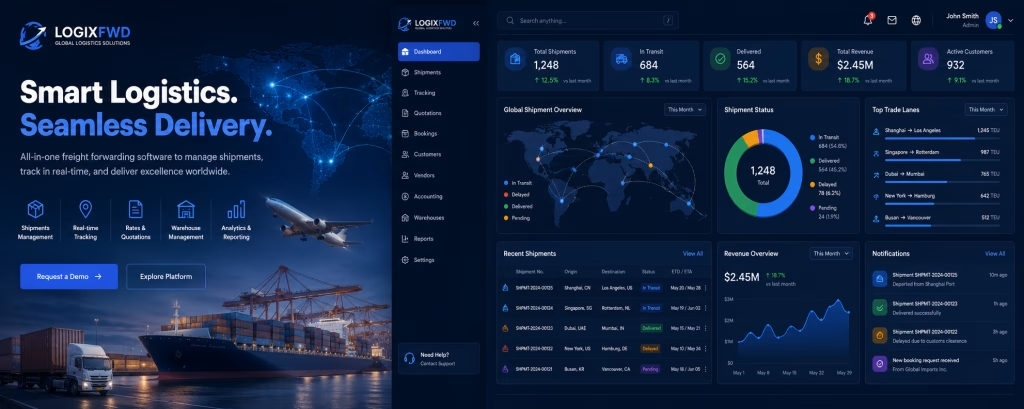
Freight forwarding software is no longer a luxury — it is the backbone of every profitable, scalable logistics operation in 2026. Whether you manage cross-border shipments, coordinate multimodal cargo, or operate as a licensed freight forwarder, the right Transportation Management System (TMS) platform can mean the difference between winning contracts and losing them to faster, leaner competitors.
In this guide, we break down the 7 best freight forwarding software solutions and TMS platforms available today — what they do, who they are for, and how to choose the right one for your business.
What Is Freight Forwarding Software?
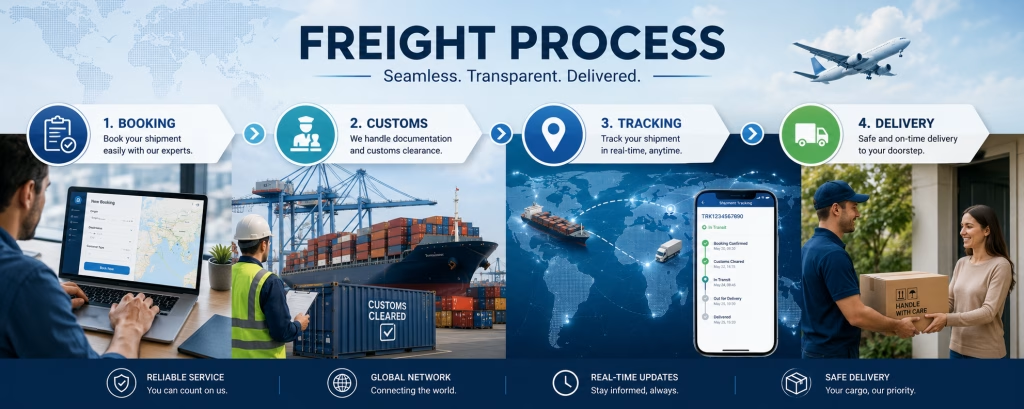
Freight forwarding software is a digital platform that helps freight forwarders, logistics providers, and shippers manage the full lifecycle of cargo movement — from booking and documentation to customs clearance, invoicing, and real-time tracking. When integrated with a Transportation Management System (TMS), these tools create an end-to-end operations hub that eliminates manual errors and speeds up delivery timelines.
Modern freight forwarding platforms typically cover:
- Ocean, air, and road freight management
- Automated Bill of Lading (B/L) and customs documentation
- Rate management and carrier contract comparisons
- Real-time cargo tracking and exception alerts
- Invoicing, profit/loss calculations, and financial reporting
- API integrations with ports, airlines, customs authorities, and ERPs
International Shipping Documentation Guide
Why Your Business Needs a TMS Platform in 2026
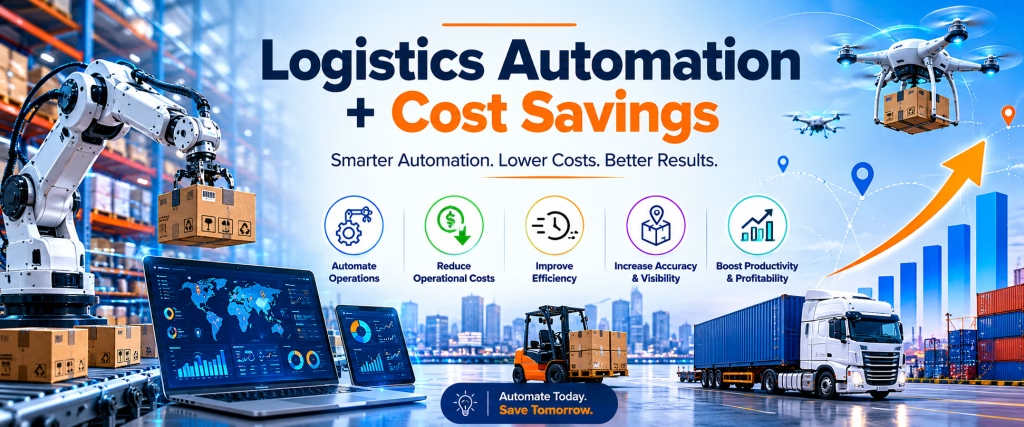
The global freight forwarding market is projected to exceed $285 billion by 2031, driven by e-commerce growth, nearshoring trends, and supply chain digitization. Freight forwarders still operating on spreadsheets or legacy systems are being outpaced rapidly.
A modern TMS platform gives you:
Operational efficiency — Automate rate quotes, bookings, document generation, and invoicing in minutes instead of hours.
Cost visibility — Identify where you are losing margin on every shipment across air, sea, and road freight.
Customer experience — Provide clients with live tracking portals, automated status updates, and digital documentation.
Scalability — Handle 10x more shipments without proportionally growing your headcount.
7 Best Freight Forwarding Software & TMS Platforms
1. CargoWise One — Best for Enterprise Freight Forwarders
CargoWise One by WiseTech Global is widely regarded as the most comprehensive freight forwarding software available for large-scale operations. It covers the entire logistics chain — from customs brokerage and warehouse management to freight forwarding and compliance — on a single unified platform. CargoWise is developed by WiseTech Global, one of the leading logistics software companies worldwide.
Key features:
- Global customs compliance in 150+ countries
- Automated EDI messaging with carriers and ports
- Integrated accounting and financial management
- Multi-branch, multi-currency, multi-language support
Best for: Mid to large freight forwarders with global operations
Pricing: Enterprise licensing — request a quote
International Customs Clearance Process
2. Flexport — Best for Data-Driven Freight Management
Flexport revolutionized the freight forwarding industry by building a software-first, data-transparent platform. Shippers get full visibility into their supply chain, from factory to final delivery, with granular analytics on lead times, costs, and carbon footprint.
Key features:
- Real-time shipment tracking and milestone alerts
- Automated documentation and compliance workflows
- Supply chain analytics and benchmarking
- Ocean, air, and road freight management
Best for: Tech-forward importers, e-commerce brands, and growing SMEs
Pricing: Varies by shipment volume and services
3. Magaya Supply Chain — Best for Small to Mid-Size Forwarders
Magaya Supply Chain is a powerful, affordable freight forwarding software built specifically for small and mid-size logistics companies. It handles freight management, warehouse operations, customs brokerage, and accounting in one interface.
Key features:
- Air and ocean cargo management
- Integrated warehousing and inventory control
- Customs filing and document automation
- QuickBooks and accounting integrations
Best for: SME freight forwarders and customs brokers
Pricing: Subscription-based — contact for pricing
4. SHIPSY — Best for Road and Last-Mile Logistics
SHIPSY is a next-generation TMS platform built for the Middle East, South Asia, and Southeast Asian markets — making it highly relevant for logistics businesses operating across the Gulf, GCC, and MENA regions. It specializes in road freight, last-mile delivery, and 3PL management.
Key features:
- Real-time driver and vehicle tracking
- Automated route optimization
- API integrations with major e-commerce platforms
- Proof of delivery (POD) and digital documentation
Best for: Road freight operators, 3PLs, and last-mile delivery companies
Pricing: Custom enterprise pricing
5. Descartes Systems — Best TMS for Compliance-Heavy Freight
Descartes Systems Group offers one of the most robust TMS platforms available, with a particular strength in regulatory compliance, customs filing, and trade lane automation. It is widely used by freight forwarders who handle regulated goods, hazardous materials, or complex cross-border trade.
Key features:
- Automated customs and trade compliance
- Global carrier network connectivity
- Route and mode optimization
- Freight audit and payment automation
Best for: Freight forwarders handling regulated, cross-border, or government cargo
Pricing: Enterprise licensing
6. GoFreight — Best Freight Forwarding Software for Startups
GoFreight is a modern, cloud-native freight forwarding software designed for startups and lean operations. It has a clean interface, fast onboarding, and includes all the core tools a new or growing forwarder needs — without the complexity or price tag of enterprise platforms.
Key features:
- Shipment and job order management
- Quotation and rate management tools
- Invoice generation and financial tracking
- Container tracking integrations
Best for: Startup freight forwarders and digital-first logistics companies
Pricing: Affordable subscription tiers — starts from approximately $150/month
7. Oracle Transportation Management (OTM) — Best TMS for Corporate Supply Chains
Oracle OTM is the industry standard TMS platform for large corporations and multinational shippers managing complex, high-volume supply chains. It is not designed for standalone freight forwarders but is the tool of choice for enterprise shippers coordinating global logistics.
Key features:
- Advanced route planning and carrier selection
- Freight cost management and audit
- Dock scheduling and yard management
- Full integration with Oracle ERP and SAP
Best for: Corporate logistics departments and enterprise shippers
Pricing: Enterprise licensing — contact Oracle directly
How to Choose the Right Freight Forwarding Software for Your Business
With so many platforms on the market, choosing the right freight forwarding software comes down to five critical factors:
1. Business Size and Volume Enterprise solutions like CargoWise and Oracle OTM are built for scale, while GoFreight and Magaya are better suited for smaller operations with tighter budgets.
2. Freight Mode Coverage Do you primarily handle ocean freight, air cargo, road transport, or all three? Ensure your platform covers the modes you actually use.
3. Regional and Customs Compliance If you operate in the Middle East, GCC, or MENA region, prioritize platforms with built-in support for local customs authorities and regional carrier integrations.
4. Integration Capability Your TMS should connect seamlessly with your existing ERP, accounting software, carrier portals, and customer systems via API.
5. Total Cost of Ownership Factor in implementation costs, training, support fees, and per-shipment charges — not just the headline subscription price.
Key Features Every Freight Forwarding Software Must Have
If you are evaluating platforms, here is a non-negotiable checklist of features your freight forwarding software should include:
- ✅ Multi-modal freight management (air, sea, road, rail)
- ✅ Automated Bill of Lading and customs documentation
- ✅ Real-time shipment tracking and status updates
- ✅ Rate management and carrier tariff comparisons
- ✅ Invoicing, credit notes, and financial reporting
- ✅ Customer portal with live tracking access
- ✅ API integrations with carriers, ports, and ERPs
- ✅ Role-based access controls and audit trails
- ✅ Mobile accessibility for field operations
The Future of Freight Forwarding Software
The next generation of freight forwarding software is being shaped by three major technology trends:
Artificial Intelligence (AI) is automating rate predictions, demand forecasting, and document processing — reducing human input on routine tasks by up to 70%. AI-driven logistics automation trends are also being adopted by major global carriers, including Maersk and enterprise software providers like Oracle Transportation Management.
Blockchain is being piloted by major carriers and port authorities to create tamper-proof, real-time Bills of Lading and customs records — reducing fraud and paperwork disputes.
IoT and Live Cargo Sensors are integrating directly with TMS platforms to provide temperature, humidity, shock, and location data for sensitive and high-value shipments.
Freight forwarders who adopt platforms built for these capabilities today will have a significant competitive advantage over the next five years.
Frequently Asked Questions About Freight Forwarding Software
What is the difference between freight forwarding software and a TMS? A Transportation Management System (TMS) focuses on planning, executing, and optimizing freight movement. Freight forwarding software includes TMS functions but also covers customs brokerage, documentation, invoicing, and client management — making it more comprehensive for forwarding businesses.
Is freight forwarding software cloud-based? Most modern platforms are fully cloud-based, which means no hardware installation, automatic updates, and access from anywhere. Some enterprise platforms like CargoWise and Oracle OTM also offer hybrid or on-premise deployment options.
How much does freight forwarding software cost? Costs range widely. Startup-friendly platforms like GoFreight begin around $150 per month, while enterprise platforms like CargoWise and Oracle OTM require custom enterprise licensing that can run into tens of thousands of dollars annually.
Can freight forwarding software integrate with customs systems? Yes. Leading platforms integrate with customs authorities in major trade corridors, including US CBP, EU customs, UAE Federal Customs Authority, and others, enabling automated customs filing and compliance management.
“Looking for a freight forwarding partner in the UAE? Contact alsantrade.com today.”
Final Verdict: Which Freight Forwarding Software Is Right for You?
There is no single best freight forwarding software — the right choice depends on your business size, freight modes, regional market, and budget.
Here is a quick summary to guide your decision:
- Enterprise forwarders: CargoWise One or Descartes Systems
- Data-driven shippers: Flexport
- SME forwarders: Magaya Supply Chain
- Startups: GoFreight
- Road and last-mile (MENA): SHIPSY
- Corporate supply chains: Oracle OTM
Investing in the right TMS platform is one of the highest-ROI decisions a freight forwarding business can make. The platforms on this list have been tested across thousands of global shipments and represent the best the industry has to offer in 2025.
At alsantrade.com, we help businesses navigate international freight, customs clearance, and global logistics with confidence. Explore our services or get in touch with our team to find the right shipping solution for your cargo.
https://shorturl.fm/sewL0
https://shorturl.fm/tc9OL
https://shorturl.fm/ehGuO
https://shorturl.fm/ZL0NM
https://shorturl.fm/y0gQ7
Well written piece! Would love a deeper dive into cotton garments.