10 Powerful Logistics ERP System Solutions in the Middle East (2026 Guide for UAE & Saudi Arabia)
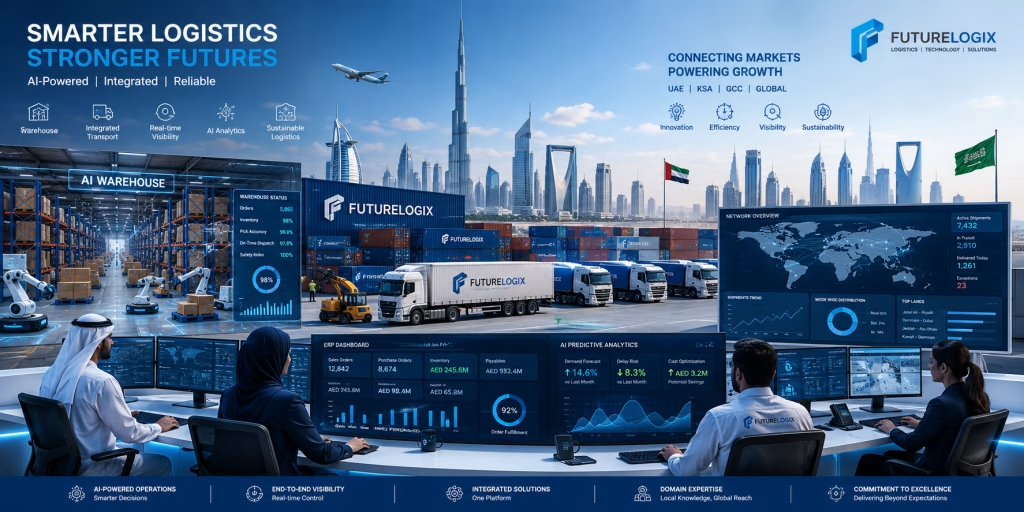
Benefits of Logistics ERP System Middle East Solutions
The logistics ERP system Middle East market has never been more competitive — or more essential. In 2026, as Saudi Vision 2030 enters its most ambitious execution phase and the UAE cements its position as the world’s fourth-largest re-export hub, logistics businesses across the GCC are racing to digitize, automate, and scale.
The Logistics ERP System Middle East market is rapidly transforming as GCC logistics companies invest in digital automation and smart supply chain infrastructure.
From the mega-warehouses of NEOM’s supply chain network to the last-mile delivery corridors of Dubai South, one truth is clear: companies still running disconnected spreadsheets, legacy software, or fragmented tools are losing ground fast to competitors powered by integrated logistics ERP systems purpose-built for the Middle East.
At Alsan Trade, we partner with freight forwarders, 3PLs, transport operators, and integrated logistics providers across the UAE, Saudi Arabia, Kuwait, Oman, Bahrain, and Qatar. The single most common bottleneck we identify? Systems that cannot keep pace with the region’s speed of growth and complexity of compliance.
This definitive 2026 guide covers everything — from what a logistics ERP system must do in the Middle East, to country-specific compliance requirements, implementation best practices, and what the smartest operators are doing right now to stay ahead.
A logistics ERP system (Enterprise Resource Planning) is an integrated software platform that unifies every operational function of a logistics business — order management, warehouse operations, freight forwarding, fleet tracking, customs documentation, financial accounting, and customer service — into one connected system with a single source of truth.
In the Middle East in 2026, this integration is not a luxury. It is the baseline requirement for survival and growth, for four defining reasons:
1. Regulatory Velocity The GCC’s compliance landscape has evolved dramatically. Saudi Arabia’s ZATCA Phase 2 e-invoicing is now fully enforced across all business sizes. The UAE’s EmaraTax platform has reshaped VAT filing. Oman, Bahrain, and Kuwait have all updated their customs and tax frameworks. A logistics ERP system built for the Middle East keeps your business compliant automatically — without expensive manual updates.
2. Trade Corridor Expansion The India-Middle East-Europe Economic Corridor (IMEC), activated in 2025, has accelerated cargo volumes across UAE and Saudi Arabia ports to record levels. Logistics companies need ERP systems that can handle multi-modal, multi-border, high-volume operations without breaking.
3. E-Commerce Logistics Explosion GCC e-commerce surpassed $50 billion in 2025 and is accelerating in 2026. Platforms like Noon, Amazon.ae, Salla, and emerging quick-commerce players have transformed last-mile delivery complexity. Managing B2C fulfillment alongside traditional B2B freight in one system is now a core requirement.
4. Talent and Cost Pressures Labor costs are rising across the GCC. Automation through a robust logistics ERP system reduces headcount dependency, eliminates costly errors, and allows lean teams to manage far higher operational volumes.
Key Modules Every Logistics ERP System in the Middle East Must Have in 2026
When evaluating a logistics ERP system for the Middle East, these are the non-negotiable modules for 2026:
1. Freight Management Module
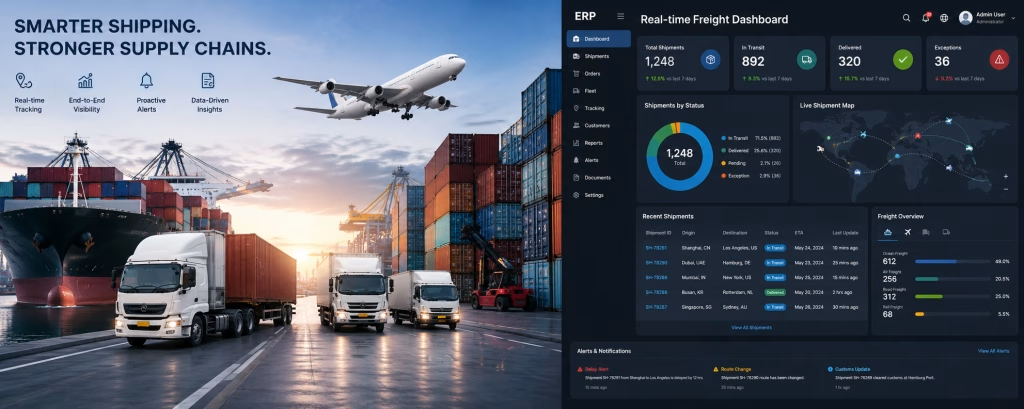
The operational core of any logistics ERP. In 2026, it must support:
- Air freight, sea freight, land freight, and multi-modal shipments
- Bill of Lading (BOL) and Airway Bill (AWB) generation
- Container and cargo tracking with real-time carrier API integrations
- Freight rate management with dynamic pricing capabilities
- Integration with major shipping lines — Maersk, MSC, CMA-CGM, Hapag-Lloyd
- IMEC corridor routing and documentation support
2. Warehouse Management System (WMS)
A fully embedded WMS eliminates the cost and complexity of running a separate system. In 2026, look for:
- Barcode, RFID, and QR code scanning
- Bin, slot, and zone management
- AI-assisted put-away and pick-path optimization
- Real-time inventory visibility across multiple GCC locations
- Returns management for e-commerce fulfillment
- Cold chain and temperature-controlled storage support
Warehouse Management Solutions
3. Customs and Compliance Module
This is the heartbeat of any logistics ERP system operating in the Middle East in 2026:
- UAE Customs integration — Dubai Trade, AD Customs, EmaraTax Logistics companies operating in the UAE must also maintain compliance with regulations issued by the UAE Federal Tax Authority to ensure proper VAT filing and tax reporting.
- ZATCA Phase 2 Fatoorah e-invoicing — fully automated
- SABER and FASAH portal integration for Saudi imports
- GCC Certificate of Origin (COO) management
- HS Code classification with AI-assisted suggestions
- Bahrain, Oman, Kuwait, Qatar customs declaration support
- AEO (Authorised Economic Operator) status management
4. Fleet and Transport Management
For asset-owning logistics operators, an embedded TMS in 2026 must deliver:
- Live GPS and telematics integration
- AI-powered route optimization
- Driver behavior scoring and safety compliance
- Fuel consumption analytics and cost allocation
- Predictive vehicle maintenance alerts
- Integration with Salik (Dubai toll) and Darb (Riyadh toll) systems
5. Financial and Accounting Module
Margin management in logistics requires a financial module that handles:
- Multi-currency transactions — AED, SAR, KWD, BHD, OMR, QAR, USD, EUR
- Automated invoice generation with ZATCA-compliant e-invoicing
- Profit and loss reporting by shipment, lane, customer, and business unit
- Intercompany accounting for multi-country GCC operations
- VAT return preparation for UAE, KSA, Bahrain, Oman
- Bank reconciliation with GCC banking API integrations
6. AI-Powered Analytics and Business Intelligence
In 2026, a logistics ERP system without embedded analytics will be behind. Demand:
- Real-time operational dashboards for management
- Predictive demand forecasting by lane and customer
- Anomaly detection for cost overruns and SLA breaches
- Customer profitability analysis
- On-time delivery and KPI tracking by the carrier
7. Customer and Vendor Self-Service Portal
Reducing administrative overhead while improving experience:
- Real-time shipment tracking for customers
- Automated status notifications via WhatsApp, email, and SMS
- Vendor invoice submission and approval workflows
- Digital document sharing and e-signature support
- Client KPI and SLA dashboards
Logistics ERP System Middle East: Country-Specific Requirements in 2026
One of the most expensive mistakes logistics companies make is purchasing a generic ERP and attempting localization as an afterthought. Here is exactly what each major market demands in 2026:
UAE
- Full EmaraTax integration for VAT filing and FTA compliance
- Dubai Trade and Abu Dhabi Customs portal connectivity
- DIFC, JAFZA, KIZAD, and other free zone documentation support
- UAE Pass digital identity integration for document signing
- VAT 5% with the upcoming e-invoicing mandate readiness
Saudi Arabia
- ZATCA Phase 2 e-invoicing — fully live and enforced in 2026
- SABER product conformity certification for imports
- Zakat, Tax, and Customs Authority compliance
- FASAH single window integration
- Arabic RTL (right-to-left) interface — not optional, not an add-on
- Nafath national digital identity integration
Kuwait
- Kuwait Customs General Administration portal integration
- Arabic COO generation
- PACI (Public Authority for Civil Information) compliance for workforce data
Oman
- Oman VAT 5% compliance — fully enforced
- Oman Customs (BAYAN system) integration
- Muscat port and Sohar port documentation support
Bahrain
- Bahrain VAT and NBR compliance
- GCCNET customs integration
- Khalifa Bin Salman Port documentation support
Qatar
- Qatar Customs (DHAREEBA) portal integration
- Hamad Port documentation and tracking
- FIFA legacy infrastructure logistics support
Top 7 Proven Benefits of a Logistics ERP System in the Middle East
Companies that have successfully implemented a logistics ERP system in the Middle East are reporting measurable results in 2026:
Up to 45% Reduction in Manual Processing Time. Connecting order management, customs, and invoicing in one automated workflow frees teams from repetitive data entry and dramatically reduces human error.
30–40% Faster Customs Clearance Automated customs documentation, pre-filled HS codes, and live portal integrations are cutting dwell times at Jebel Ali, King Abdullah Port, and border crossings across the GCC.
25% Average Reduction in Freight Costs AI-powered route optimization, carrier rate comparison, and load consolidation tools embedded in leading ERP platforms are delivering significant freight cost savings.
Real-Time Visibility Across All GCC Operations Management sees every shipment, warehouse transaction, and vehicle movement — updated in real time, from a single dashboard, across every country of operation.
Significantly Higher Customer Retention Self-service tracking portals, automated WhatsApp status updates, and on-time delivery improvements translate directly into stronger client relationships and contract renewals.
Seamless Multi-Country Scalability Cloud-based logistics ERP systems allow companies to launch operations in a new GCC country without rebuilding their technology stack from scratch.
Full Regulatory Compliance — Always Automatic compliance updates for ZATCA, EmaraTax, and GCC customs frameworks mean your business is never caught off-guard by regulatory changes.
Cloud vs. On-Premise Logistics ERP in the Middle East: The 2026 Verdict
This debate was largely settled in 2026. Here is the honest breakdown:
Cloud-Based Logistics ERP
Best for: Growth-stage companies, multi-country GCC operations, businesses prioritizing speed and flexibility
- Lower upfront investment — subscription-based monthly pricing
- Automatic compliance patches — critical as GCC regulations evolve rapidly
- Accessible from any device, any location — essential for field and port operations
- Implementation in as little as 6–10 weeks for SMEs
- UAE and KSA data residency options now standard with leading vendors
- Built-in disaster recovery and 99.9% uptime SLA
On-Premise Logistics ERP
Best for: Large enterprises with complex legacy IT environments and strict internal data governance policies
- Full control over data infrastructure
- Higher upfront licensing and hardware costs
- Implementation timelines of 6–18 months
- Dedicated internal IT team required for maintenance and upgrades
The 2026 recommendation: The overwhelming majority of Middle East logistics companies — from ambitious SMEs to multi-country 3PLs — are moving to cloud-first or hybrid ERP architectures. The agility, compliance automation, and total cost advantages are simply too significant to ignore.
How to Choose the Right Logistics ERP System for Your Middle East Business in 2026
Here is a proven 7-step framework used by successful logistics operators across the GCC:
Step 1 — Define Your Exact Operational Profile
Are you a freight forwarder, a 3PL warehousing operator, an asset-owning transport company, or an integrated logistics provider? Each profile has fundamentally different ERP priorities. Map your core processes before speaking to any vendor.
Step 2 — Demand GCC Localization Evidence
Ask vendors directly: Is ZATCA Phase 2 live in your system today — not “coming soon”? Is your Arabic interface native RTL, or a translated overlay? Can you show me a UAE Customs declaration processed live? Vague “we support it” answers are disqualifying.
Step 3 — Evaluate Integration Depth
Your logistics ERP must connect with:
- Shipping line and airline portals
- GCC customs single-window systems
- Telematics and GPS hardware providers
- E-commerce platforms — Noon, Amazon.ae, Salla
- GCC banking and payment gateways
- WhatsApp Business API for automated customer notifications
Step 4 — Verify Regional Customer References
How many logistics companies in the UAE, KSA, or wider GCC are live and operating on this system today? Not pilots — fully live. Request customer references. A vendor with 500 clients in Europe and 5 in the GCC does not understand your business.
Step 5 — Model Total Cost of Ownership Over 3 Years
Beyond the headline license or subscription fee, calculate:
- Implementation, customization, and data migration costs
- Bilingual training costs for Arabic and English-speaking teams
- Annual support, maintenance, and upgrade fees
- Compliance update costs as GCC regulations evolve
Step 6 — Assess the Vendor’s 2026 Product Roadmap
Is the vendor investing in AI, IoT, and blockchain capabilities relevant to Middle East logistics? Do they have a dedicated GCC product team? Are they attending and presenting at regional logistics events? Vendors not investing in the region’s future are not safe long-term partners.
Step 7 — Insist on a Live GCC Demo — No Slides
Request a live demonstration using a UAE or Saudi Arabia scenario. Show me the ZATCA invoice. Show me the Dubai Trade customs export declaration. Show me the Arabic dashboard. If they cannot do it live, they cannot do it in production.
Common and Costly Mistakes to Avoid in 2026
Even with the right system, implementation failures remain common. These are the mistakes Alsan Trade sees most frequently across the GCC:
Underestimating Data Migration Years of shipment records, customer master data, and tariff structures need thorough cleaning before migration. Budget a minimum of 20–25% of the total project cost specifically for data migration.
Skipping Bilingual Training: Your ERP is only as powerful as the team using it. Invest in structured, bilingual Arabic-English training — not a one-day handover session.
No Parallel Running Period: Run the old system alongside the new ERP for a minimum of 4–6 weeks before full cutover. This safety net catches critical errors before they damage customer relationships.
Neglecting Change Management, staff resistance remains the leading cause of ERP project failure globally. Identify internal champions, communicate the “what’s in it for me” clearly to every user group, and involve key staff from day one.
Optimizing for Price Instead of Fit. The cheapest ERP option almost always becomes the most expensive, through customizations, compliance gaps, and eventual costly replacement.
The Future of Logistics ERP Systems in the Middle East: Beyond 2026
The most forward-thinking logistics operators in the GCC are already planning for the next wave of ERP evolution:
Generative AI for Operational Intelligence Beyond analytics, the next-generation logistics ERP systems are embedding generative AI to draft customer communications, auto-generate customs documentation, and provide conversational querying of operational data — in Arabic and English.
Blockchain-Based Trade Documentation: Dubai Customs and Saudi Ports Authority are expanding blockchain-verified Bills of Lading and Certificates of Origin. ERP systems with native blockchain connectivity will become the standard for compliant cross-border trade.
IoT and Smart Warehouse Integration. Smart warehouses equipped with IoT environmental sensors, automated conveyor systems, and autonomous mobile robots (AMRs) are feeding real-time data streams directly into ERP dashboards — critical for pharmaceutical, food, and high-value cargo logistics across the GCC.
Autonomous and Drone Delivery Integration With Dubai’s Roads and Transport Authority (RTA) advancing autonomous delivery licensing, logistics ERP systems are beginning to integrate dispatch and proof-of-delivery modules for drone and driverless vehicle operations.
IMEC Digital Trade Corridor The India-Middle East-Europe Economic Corridor is driving demand for ERP systems capable of managing seamless multi-modal documentation across Indian, GCC, and European regulatory frameworks in a single workflow.
Why Alsan Trade Is the Trusted Partner for Logistics ERP in the Middle East in 2026
At Alsan Trade, we bring something no generic ERP vendor can offer — deep, on-the-ground understanding of how logistics businesses across the GCC actually operate in 2026.
We know the documentation requirements at Jebel Ali Port. We understand the compliance complexity of cross-border Saudi trade under ZATCA Phase 2. We have helped logistics operators in Kuwait navigate PACI workforce compliance while simultaneously going live on a new ERP. This is the expertise that turns an ERP implementation from a painful project into a genuine competitive advantage.
What makes Alsan Trade different:
- GCC-first architecture — Built for the region, not adapted for it
- Native Arabic and English — Interface, support, and training in both languages
- Compliance built-in — ZATCA, EmaraTax, GCC Customs — always current
- Proven regional track record — Live customers across UAE, KSA, Kuwait, Oman, and Bahrain
- Full implementation ownership — From scoping through go-live and ongoing support
- 2026-ready roadmap — AI, IoT, blockchain, and IMEC capabilities in active development
Frequently Asked Questions: Logistics ERP System Middle East 2026
Q: How long does it take to implement a logistics ERP system in the Middle East in 2026? A: Cloud-based logistics ERP systems for SMEs can go live in 6–10 weeks with proper preparation. Mid-size companies typically complete implementation in 3–6 months. Enterprise deployments with complex multi-country configurations range from 6–12 months.
Q: What does a logistics ERP system cost in the UAE in 2026? A: Cloud-based solutions for logistics companies are typically priced between AED 2,500 and AED 18,000 per month depending on user count, modules, and transaction volume. Enterprise on-premise implementations range from AED 200,000 to AED 600,000 or more including implementation services.
Q: Is our data safe in a cloud logistics ERP in the Middle East? A: Leading cloud ERP vendors in 2026 offer data residency options with dedicated servers located inside the UAE and Saudi Arabia, fully compliant with UAE PDPL (Personal Data Protection Law) and Saudi PDPL. Always verify data residency in writing before contract signing.
Q: Can one logistics ERP system handle freight forwarding, warehousing, and transport operations together? A: Yes. The best logistics ERP platforms in 2026 are designed as unified systems covering freight forwarding, WMS, TMS, customs, and financials in one integrated platform — eliminating costly multi-system environments.
Q: Is ZATCA Phase 2 e-invoicing already built into modern logistics ERP systems? A: It must be. In 2026, any logistics ERP system operating in Saudi Arabia that does not have native, fully live ZATCA Phase 2 Fatoorah compliance is not fit for purpose. This is your first qualification question for any vendor.
Q: How important is Arabic language support in a logistics ERP for the Middle East? A: Critical. Not just for local staff usability, but for Arabic customer-facing documents, regulatory submissions, and government portal integrations. Native Arabic RTL interface — not a translation layer — is essential.
Final Thoughts
Choosing the right logistics ERP system for the Middle East in 2026 is one of the highest-impact decisions your business will make this decade. The GCC’s growth trajectory, regulatory sophistication, and competitive intensity demand a system engineered for this region — not one that was built elsewhere and later adapted.
Whether you are a freight forwarder in Dubai automating customs documentation, a 3PL in Riyadh managing multi-client warehouses under ZATCA compliance, or a transport operator in Kuwait optimizing your fleet with AI-powered routing, the right logistics ERP system will be the operational backbone that powers your next five years of growth.
The companies investing in the right platform today are the ones that will dominate the GCC logistics landscape tomorrow.
Ready to find the right logistics ERP system for your Middle East operations in 2026?
Alsan Trade is ready to help you make the right choice, execute a clean implementation, and grow with confidence across every GCC market.